AI-Designed Interiors: 20 Smart Home Design Ideas Shaping the Future of Modern Living
Modern homes are increasingly shaped by technology, and AI-designed interiors are leading this transformation. Instead of relying on guesswork, homeowners now use AI interior design to create smarter layouts, personalised aesthetics, and better space utilisation. From small apartments to luxury homes, artificial intelligence helps analyse room dimensions, lighting conditions, and lifestyle needs to deliver balanced interior solutions. With AI-designed interiors, decisions around furniture placement, colour palettes, and spatial flow become clearer and more intentional. The result is a home that feels modern, functional, and visually cohesive without unnecessary trial and error.
As interior design trends evolve, AI interior design is becoming an essential tool for future-ready living. By analysing data rather than trends alone, AI helps homeowners create spaces that support comfort, efficiency, and long-term usability. Smart bedrooms, well-planned living rooms, efficient kitchens, and seamless open-plan interiors are now achievable through AI-driven design insights. Rather than replacing creativity, AI-designed interiors enhance human decision-making by offering clarity and structure. In this guide, you’ll explore 20 AI-designed interior ideas that demonstrate how technology is reshaping modern home design while maintaining warmth, style, and practicality.
1. AI Interior Design for Small Apartments That Maximises Space and Style
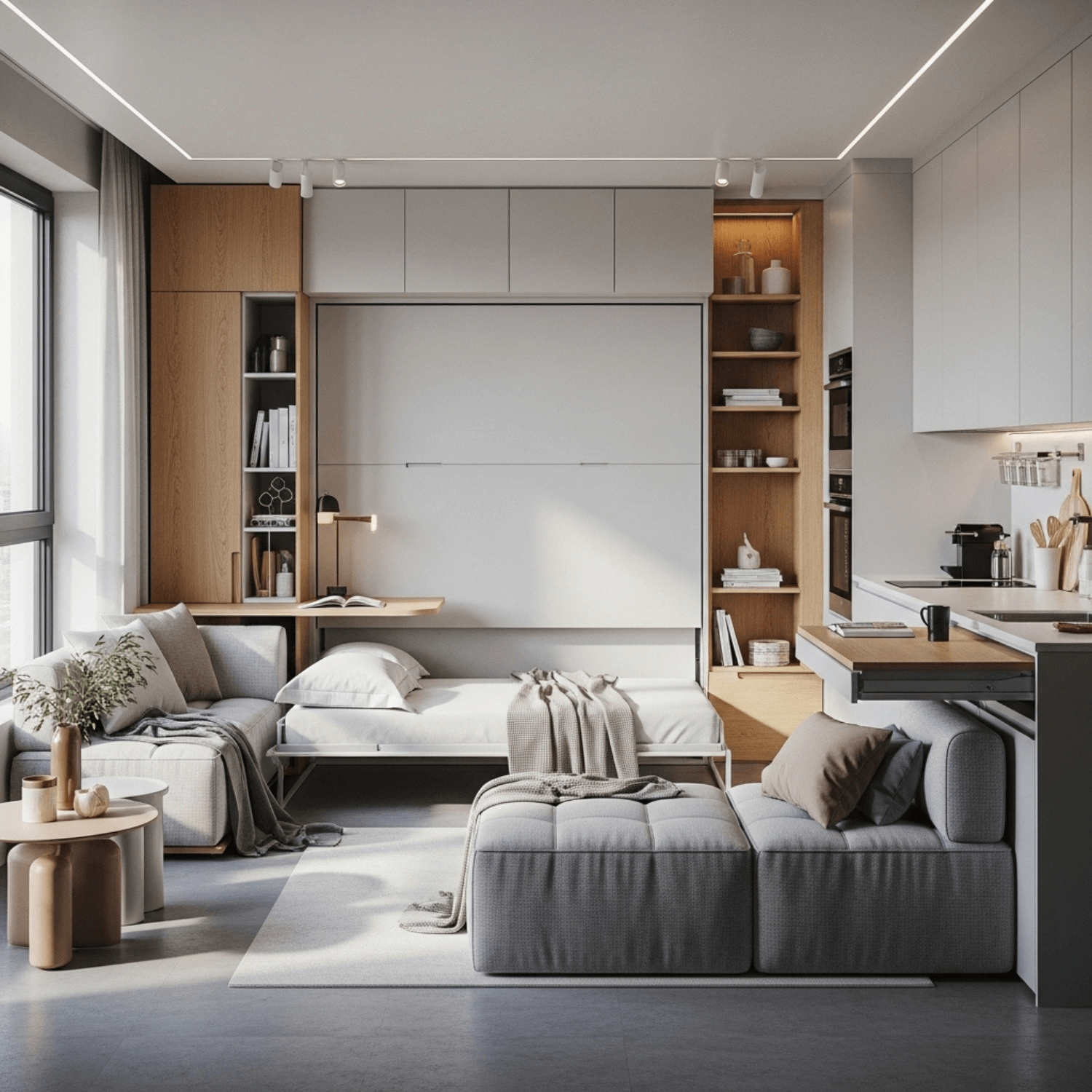
AI interior design for small apartments is reshaping how compact homes are planned and experienced. Limited square footage often creates challenges such as overcrowding, poor storage, and restricted movement. AI-powered design tools analyse room dimensions, ceiling height, window placement, and daily lifestyle needs to generate layouts that feel open and functional. Instead of adding more furniture, AI focuses on smarter placement, vertical storage solutions, and multi-purpose pieces that serve more than one function.
Another major benefit of AI interior design for small apartments is visual clarity. Light colour palettes, reflective surfaces, and balanced lighting are often recommended to make rooms appear larger. AI also helps identify unused or awkward corners and turns them into practical zones such as reading nooks or compact workspaces. By combining aesthetics with data-driven planning, AI allows small apartments to feel organised, modern, and comfortable without unnecessary renovation costs.
2. AI Room Makeover Before and After Ideas That Transform Any Space
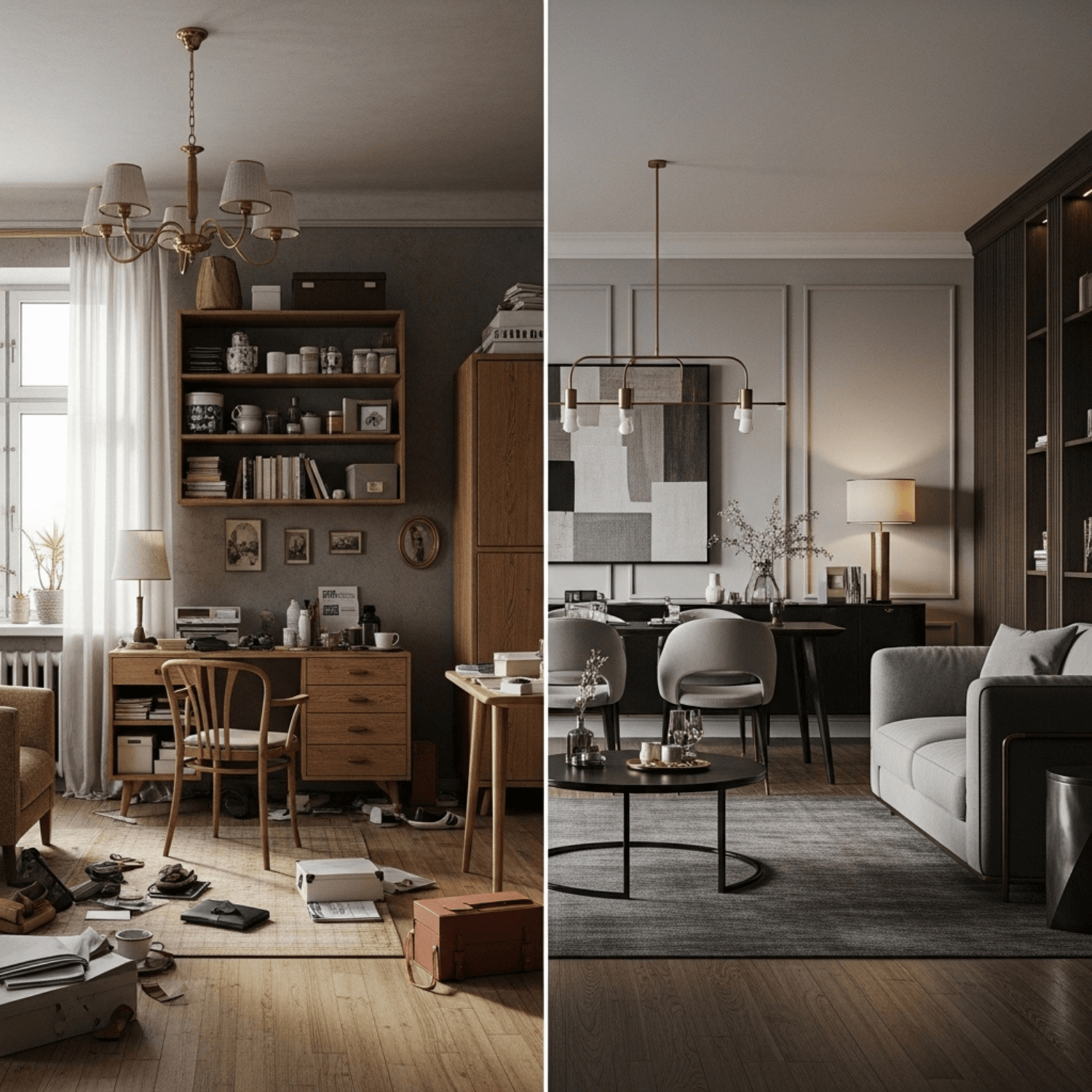
AI room makeover before and after concepts clearly demonstrate how thoughtful design can completely change a space.
By closely examining the existing condition of a room, AI tools identify layout flaws, lighting problems, and cluttered areas that limit functionality. The “before” version typically highlights imbalance or outdated styling, while the “after” presents a refined, functional, and visually appealing interior. These transformations focus on proportion, lighting layers, and purposeful furniture placement rather than unnecessary decoration.
What makes AI room makeover before and after ideas powerful is the ability to visualise outcomes before making real changes. Homeowners can test colour schemes, layouts, and decor styles digitally, reducing costly mistakes. AI often recommends subtle yet impactful updates such as rearranging furniture, improving lighting, or simplifying colour choices. The result is a room that feels intentional, balanced, and modern. These before-and-after transformations prove that intelligent planning can create dramatic improvements without major renovations.
3. AI Interior Design for Modern Homes With Clean and Functional Layouts
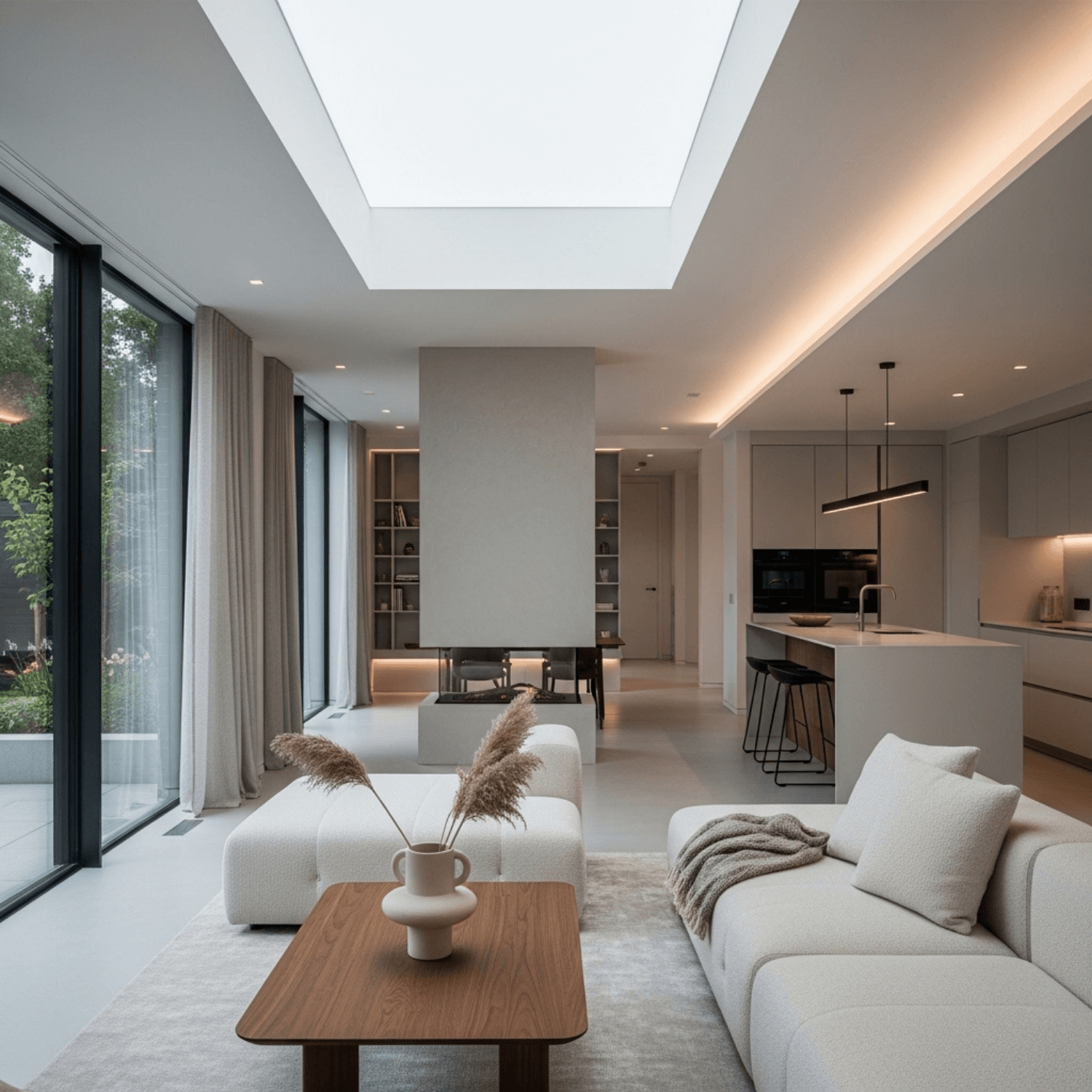
AI interior design for modern homes enhances the clean and functional aesthetic that defines contemporary living. Modern homes often feature open layouts, minimal detailing, and strong architectural lines. AI tools analyse these elements to suggest furniture, materials, and lighting that complement the structure rather than compete with it. Instead of overcrowding spaces, AI prioritises balance, symmetry, and visual flow.
Colour palettes in AI interior design for modern homes typically lean toward neutrals with subtle contrasts, allowing architectural features to stand out. Lighting recommendations focus on layered solutions that add warmth without clutter. AI also helps remove unnecessary elements, ensuring every piece serves a purpose. The result is a modern home that feels calm, refined, and practical for daily living. By blending technology with thoughtful design principles, AI ensures modern interiors remain timeless rather than trend-driven.
4. AI Interior Design Ideas for Bedrooms That Improve Comfort and Style
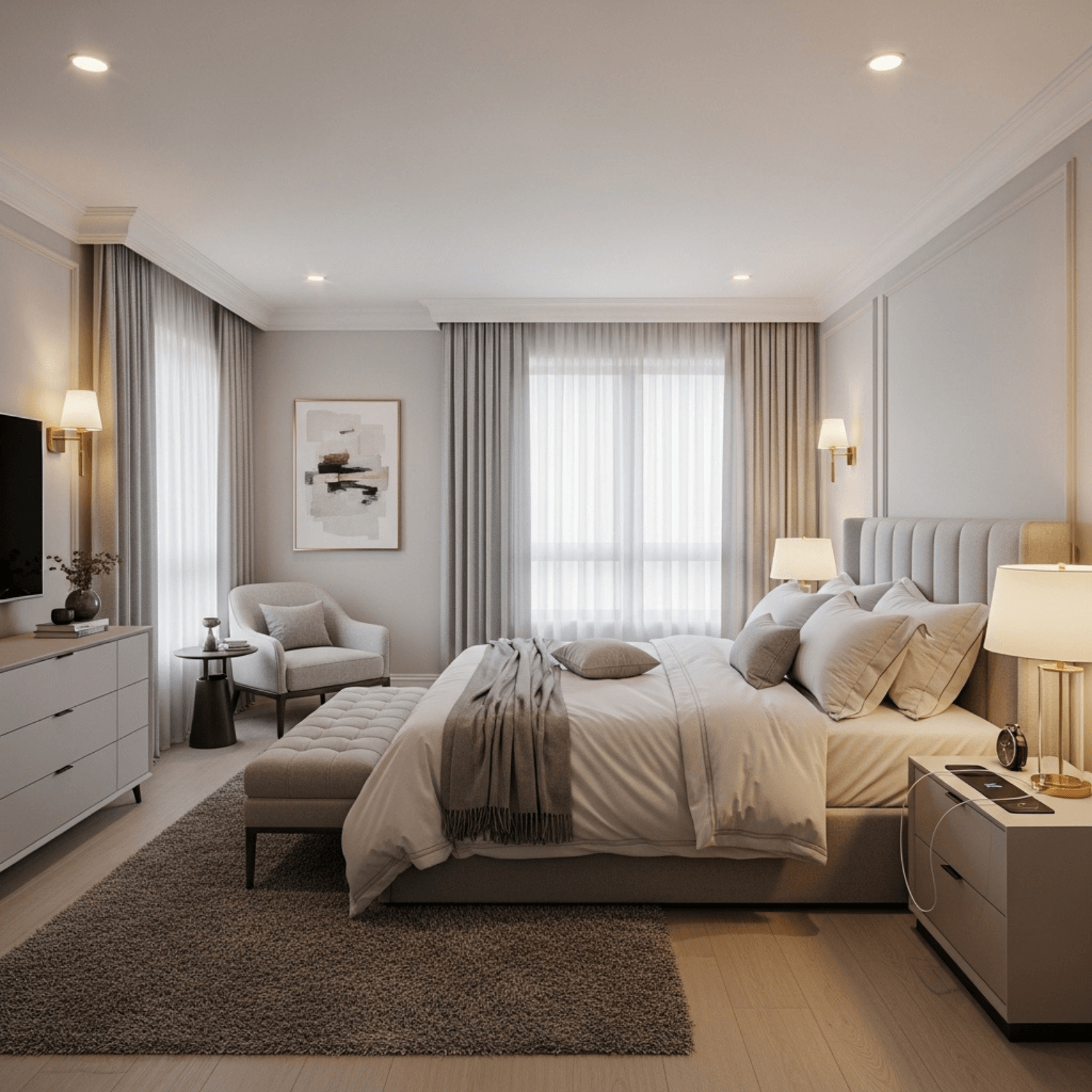
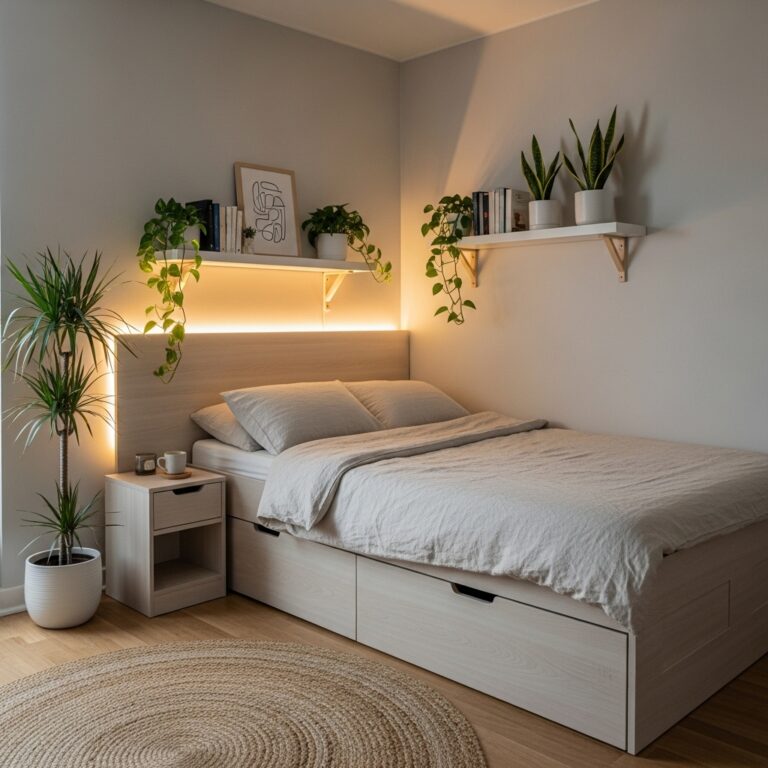
AI bedroom interior design ideas focus on creating spaces that support relaxation while maintaining visual harmony. Bedrooms require a careful balance between comfort and style, and AI tools excel at analysing room proportions, natural light, and personal preferences. Based on this data, AI suggests calming colour palettes, optimal bed placement, and layered lighting that enhances restfulness.
AI bedroom interior design ideas often prioritise symmetry and clutter-free organisation. Storage solutions are integrated seamlessly to maintain a peaceful environment. Soft textures, balanced furniture scale, and warm lighting contribute to a sense of comfort without overwhelming the space. By visualising multiple design options, homeowners can select layouts that suit their sleep habits and lifestyle. The final result is a bedroom that feels organised, cozy, and visually refined, making it a true retreat from daily stress.
5. AI Interior Design for Living Rooms That Feel Balanced and Inviting
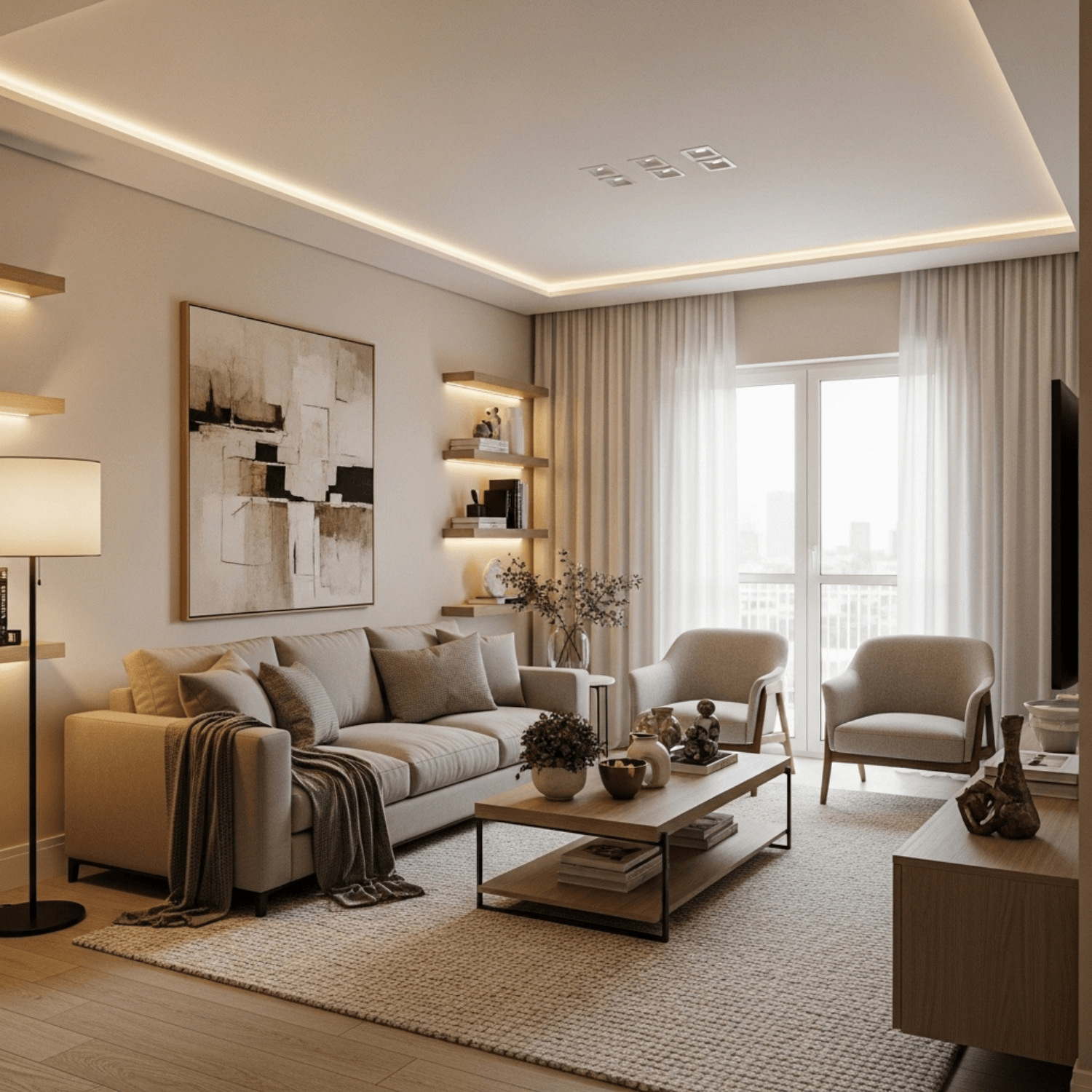
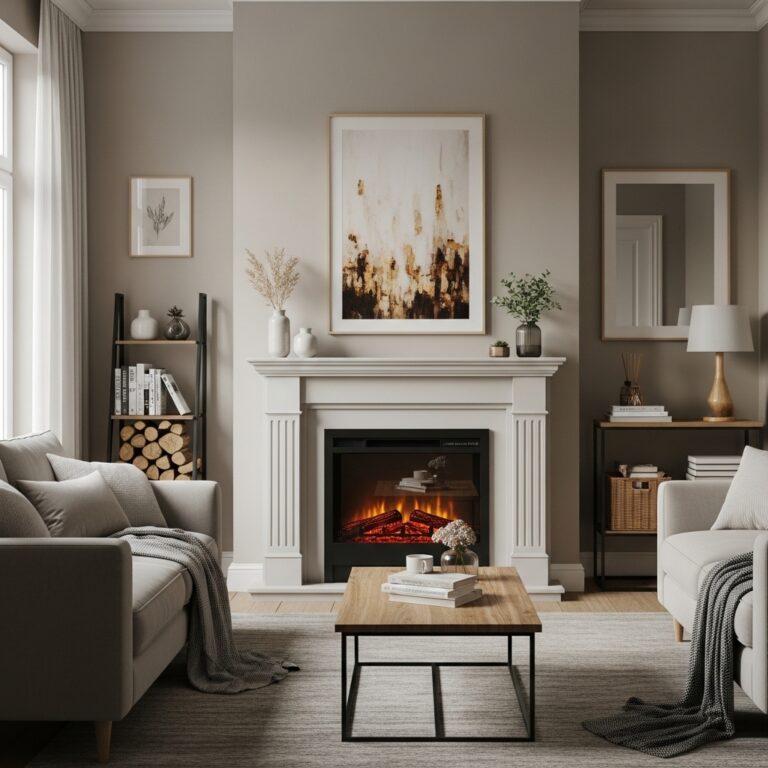
AI living room design ideas help transform everyday spaces into welcoming and functional environments. Living rooms serve multiple purposes, from relaxation to social gatherings, and AI tools analyse seating needs, movement patterns, and lighting requirements. This ensures furniture placement feels natural while maintaining clear pathways. Instead of overcrowding, AI recommends well-proportioned pieces that create balance.
AI living room design ideas also focus on visual harmony through color coordination and texture layering. Lighting plays a major role, with AI suggesting ambient, task, and accent lighting to suit different moods. The result is a living room that feels warm, organised, and adaptable. By removing guesswork, AI helps homeowners achieve interiors that are both stylish and comfortable, making the living room a true Centre of the home.
6. AI Interior Design for Luxury Homes With Timeless Elegance

AI luxury interior design focuses on refinement, proportion, and understated elegance. Luxury spaces require careful coordination of materials, textures, and lighting, which AI tools analyse with precision. Instead of excessive decoration, AI recommends high-quality finishes, statement elements, and balanced layouts that enhance architectural beauty.
AI luxury interior design often uses layered lighting, rich textures, and neutral colour schemes to create sophisticated environments. Every element is intentional, ensuring large spaces feel cohesive rather than overwhelming. AI also helps maintain consistency across multiple rooms, which is essential in luxury homes. The result is an interior that feels curated, timeless, and effortlessly elegant, reflecting a modern approach to high-end living.
7. AI Interior Design for Budget Homes That Look Stylish and Practical
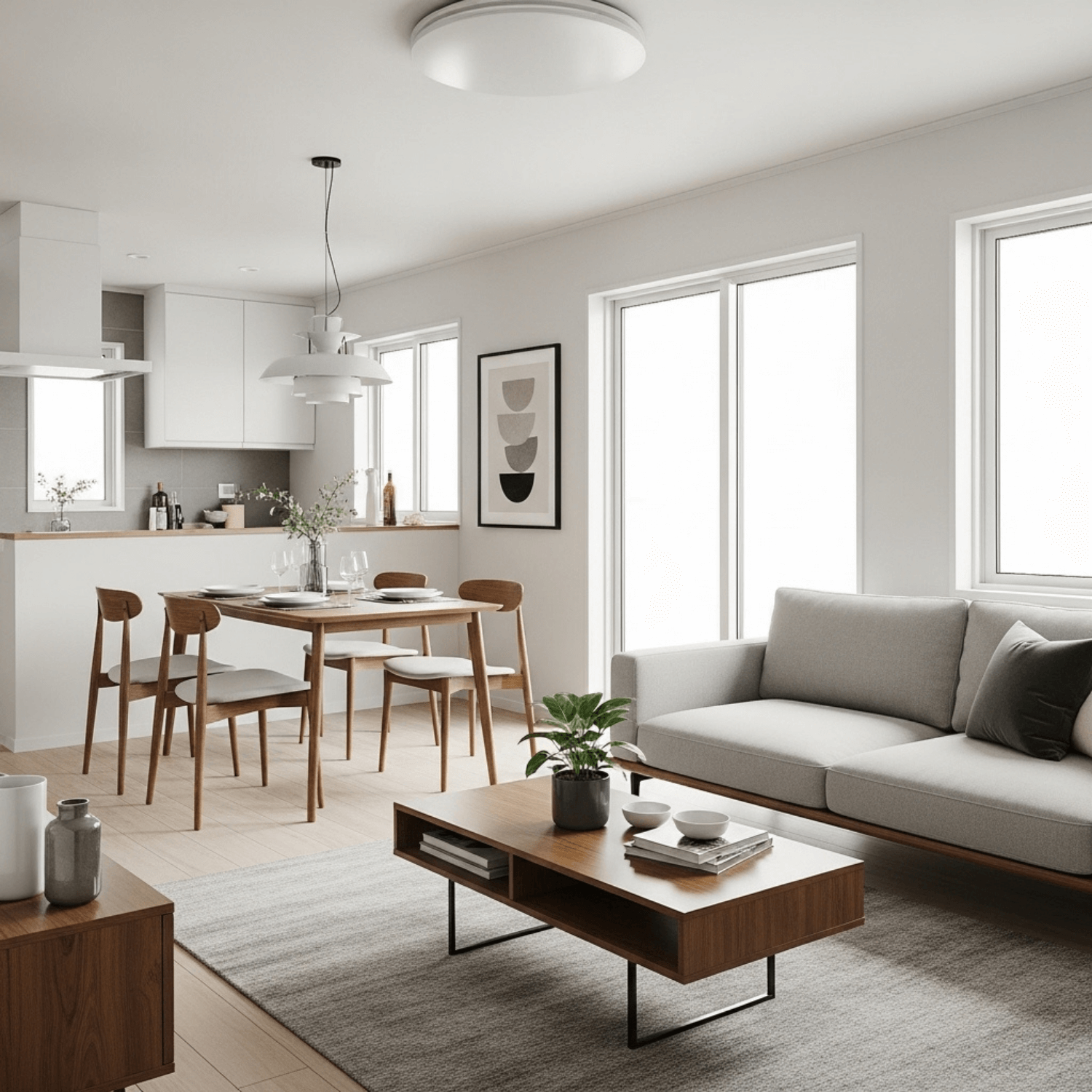
AI interior design on a budget proves that stylish homes are possible without excessive spending.
Instead of focusing on costly upgrades, AI tools prioritise smart planning by analysing existing furniture, layout efficiency, and affordable material options. Instead of costly renovations, AI focuses on rearranging spaces, updating colour schemes, and improving lighting for maximum impact.
AI interior design on a budget also helps homeowners avoid expensive mistakes by visualising outcomes before purchasing. Affordable alternatives that achieve a similar aesthetic to premium materials are suggested. This approach ensures practicality without sacrificing style. With thoughtful planning and efficient use of resources, AI enables budget homes to feel modern, comfortable, and visually appealing.
8. AI Home Design Ideas for Renters With Flexible Decor Solutions
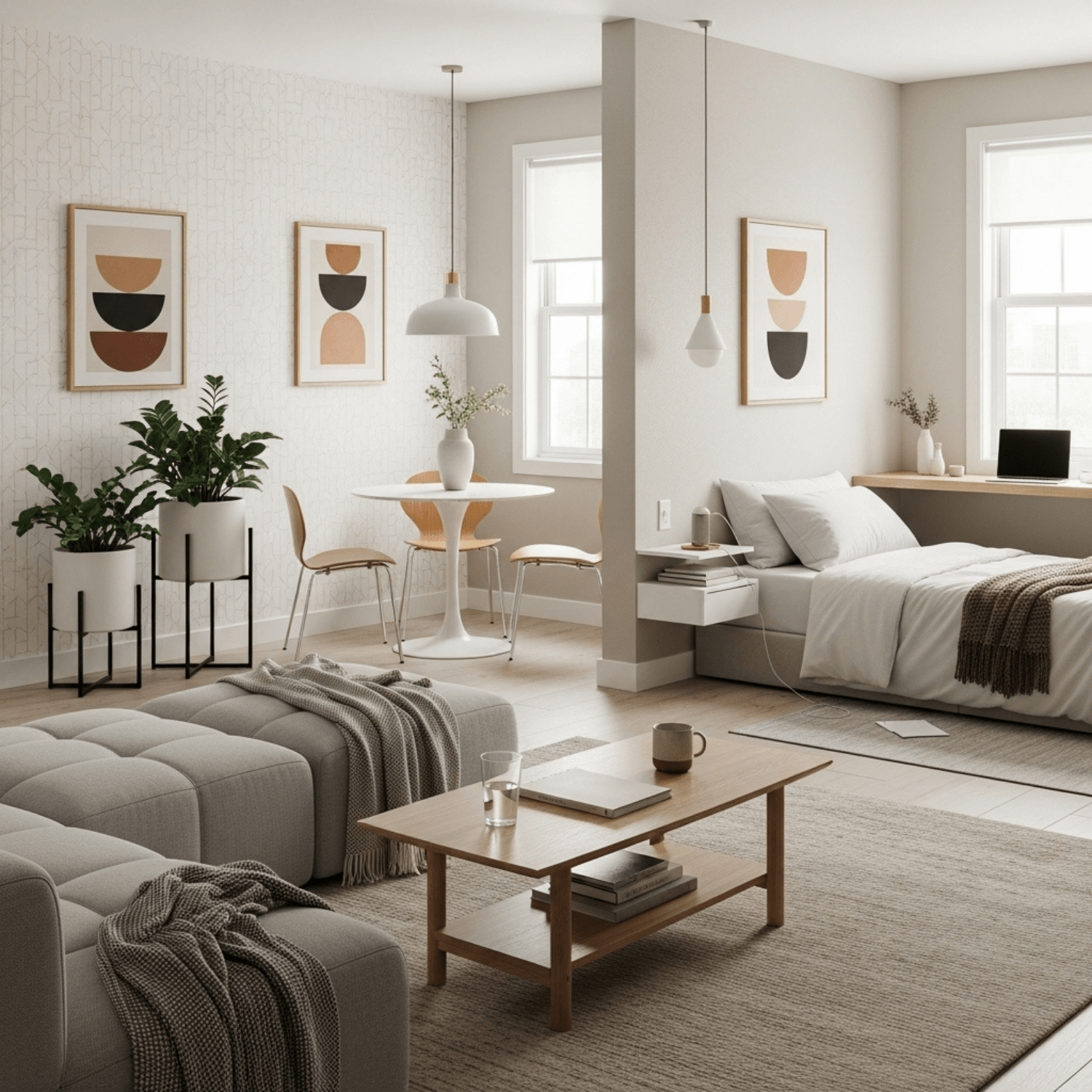
AI interior design for renters provides creative solutions within rental restrictions. Since permanent modifications are often not allowed, AI focuses on removable decor, modular furniture, and adaptable layouts. These ideas allow renters to personalise their homes without violating lease agreements.
AI interior design for renters emphasises flexibility and ease of change. Furniture placement is optimised for both comfort and portability. Color palettes and decor elements are chosen to enhance the space without permanent alterations. This approach helps renters create stylish, comfortable homes that feel personal while remaining practical for future moves.
9. AI Interior Design Color Palette Ideas for Cohesive Homes
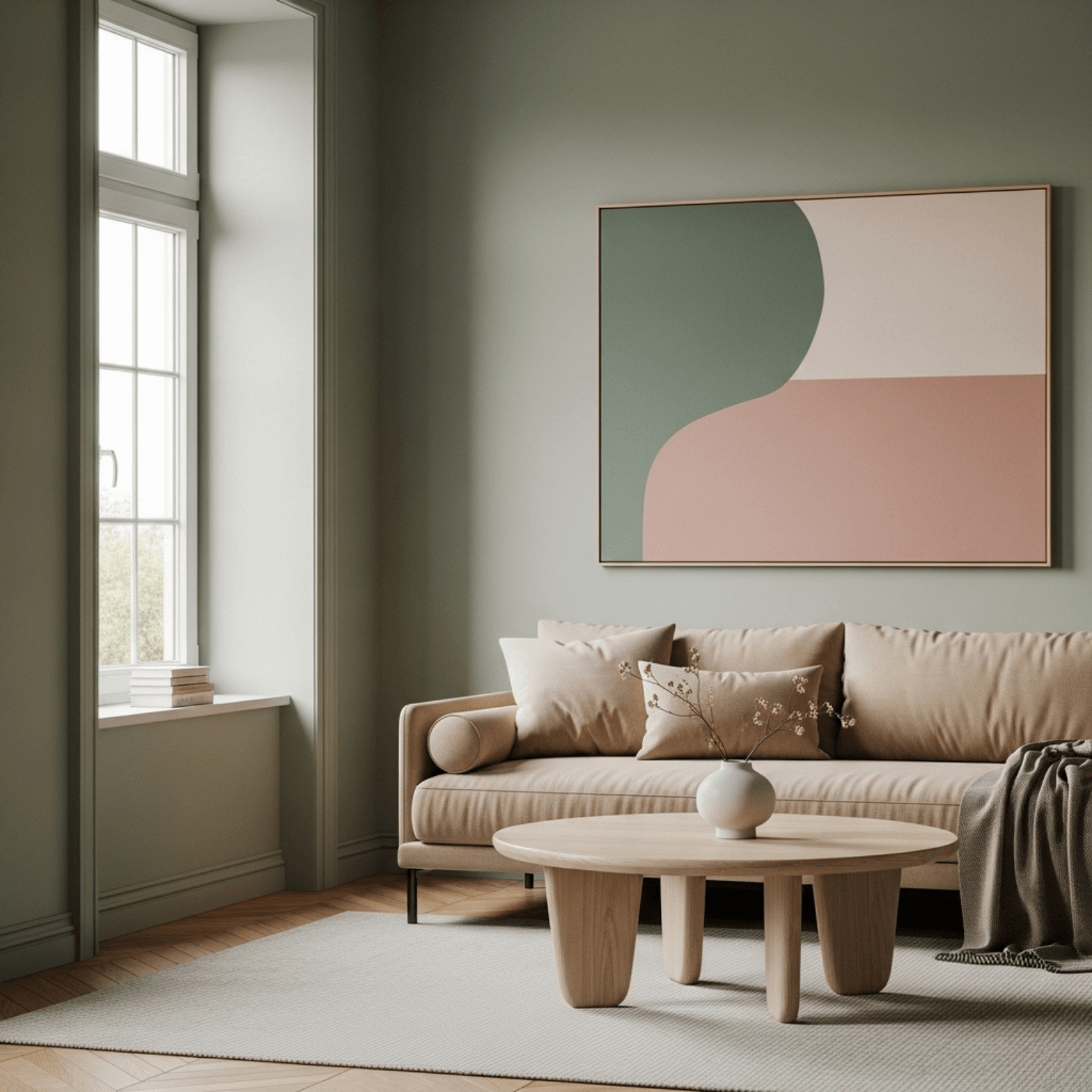
AI interior color palette ideas simplify one of the most challenging design decisions in home design.
By assessing natural light, room size, and mood preferences, AI suggests color combinations that feel balanced, cohesive, and visually comfortable. Instead of following short-lived trends, AI focuses on timeless palettes that enhance comfort.
AI interior color palette ideas help maintain visual consistency throughout the home. Soft neutrals, warm earth tones, and subtle contrasts are commonly recommended. This approach creates calm, harmonious interiors where colours support the design rather than overpower it.
10. AI Interior Design for Minimalist Homes With Calm Aesthetics
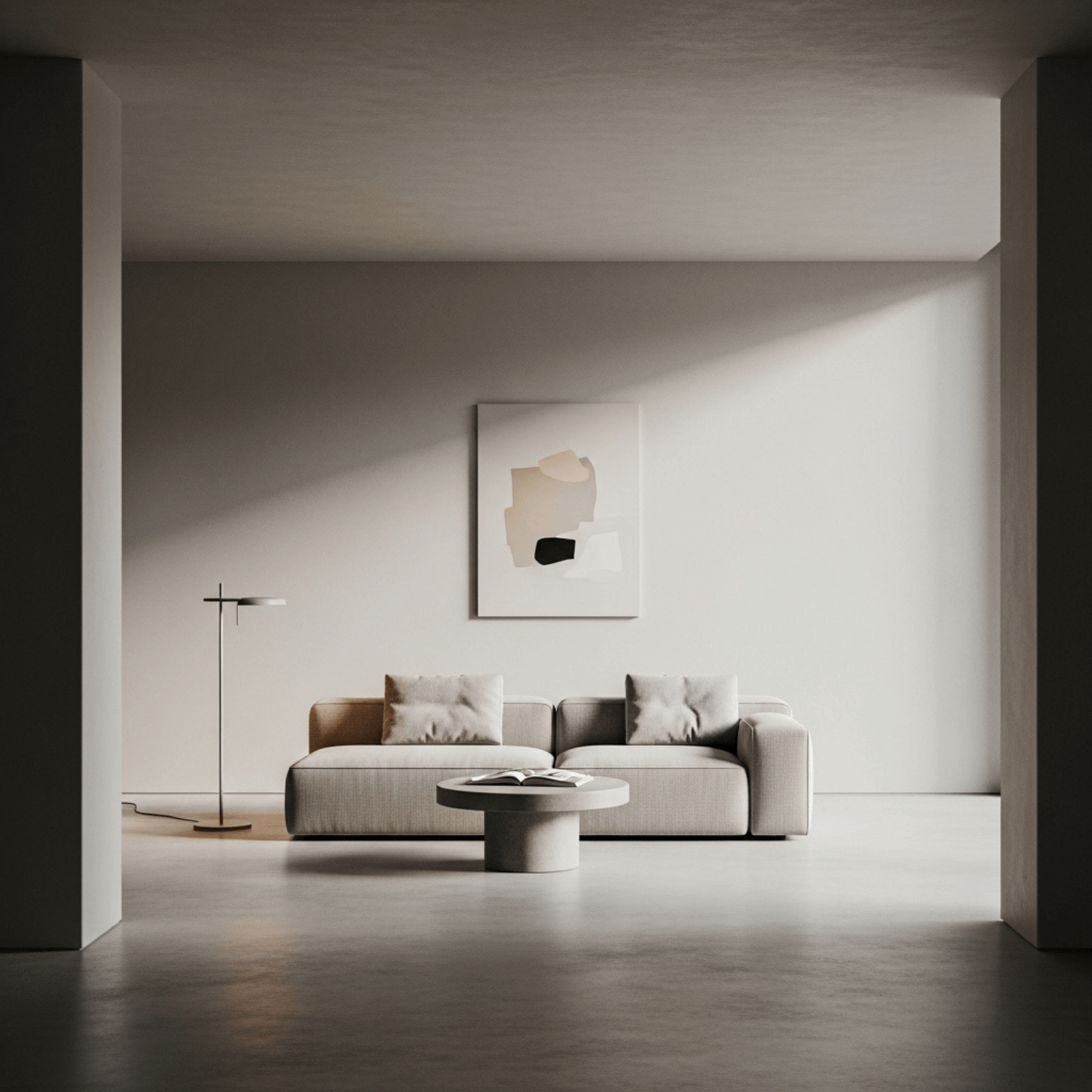
AI minimalist interior design focuses on clarity, simplicity, and intentional living. Minimalist homes thrive on open space and thoughtful choices, which AI tools enhance by removing unnecessary elements. Furniture, colours, and textures are selected with purpose.
AI minimalist interior design often features neutral tones, clean lines, and subtle textures. Lighting is soft and balanced, adding warmth without clutter. The result is a peaceful interior that feels organised and visually calm, supporting a mindful lifestyle.
11. AI Interior Design for Open Plan Homes With Smart Zoning
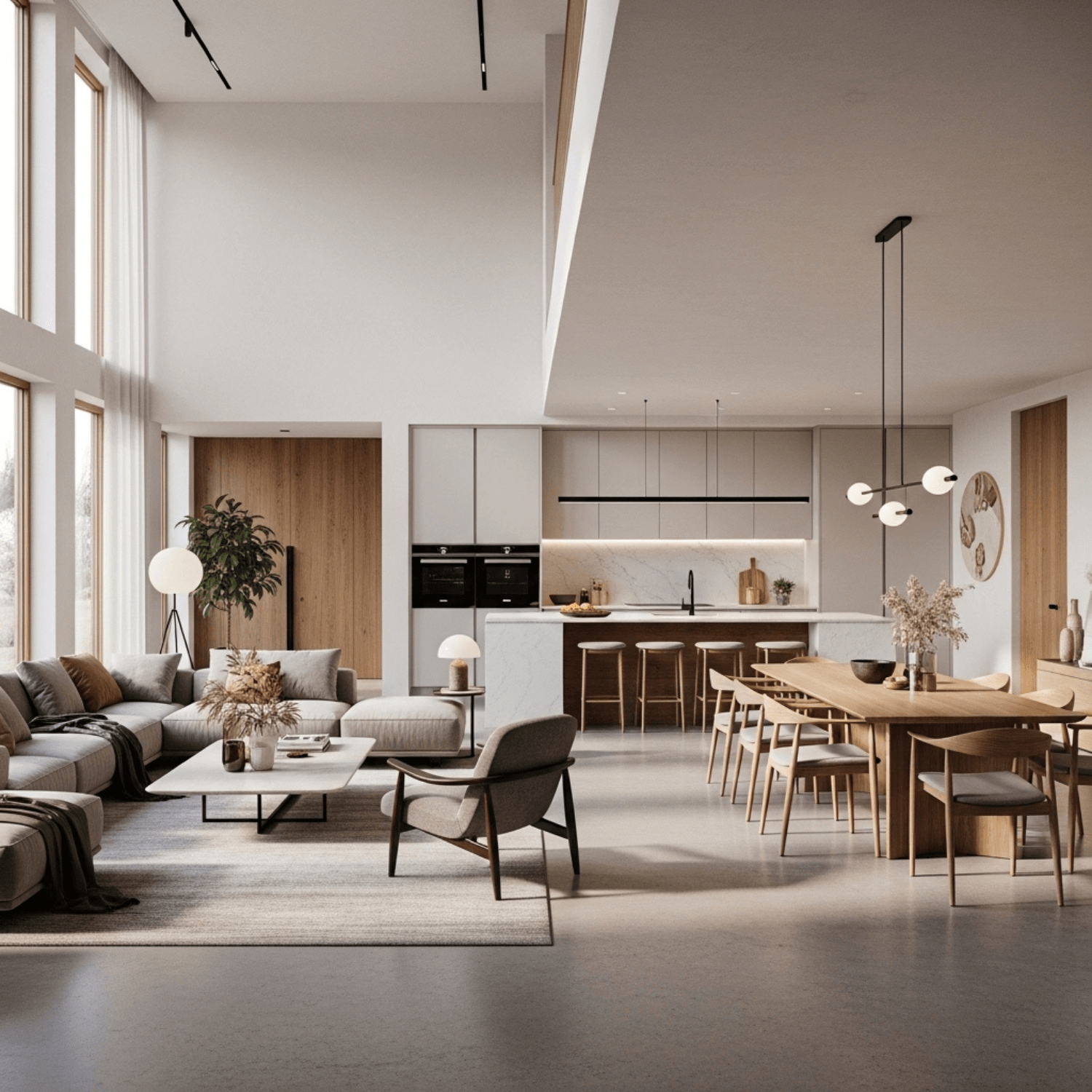
AI open plan interior design plays a crucial role in making large, open spaces feel organised and functional. Open layouts can easily appear chaotic if zones are not clearly defined. AI tools analyse room dimensions, natural light flow, and movement patterns to create subtle divisions without using walls. Furniture placement, area rugs, lighting variations, and ceiling details are used to visually separate living, dining, and kitchen areas.
AI open plan interior design ensures each zone has a clear purpose while maintaining openness. Seating arrangements are planned to encourage interaction, while pathways remain unobstructed. Colour continuity is maintained to avoid visual clutter, yet slight tonal shifts help define different functions. The result is an open plan home that feels structured, balanced, and easy to live in. AI eliminates guesswork, allowing homeowners to enjoy spacious interiors that feel cohesive rather than overwhelming.
12. AI Interior Design for Smart Homes With Seamless Technology Integration
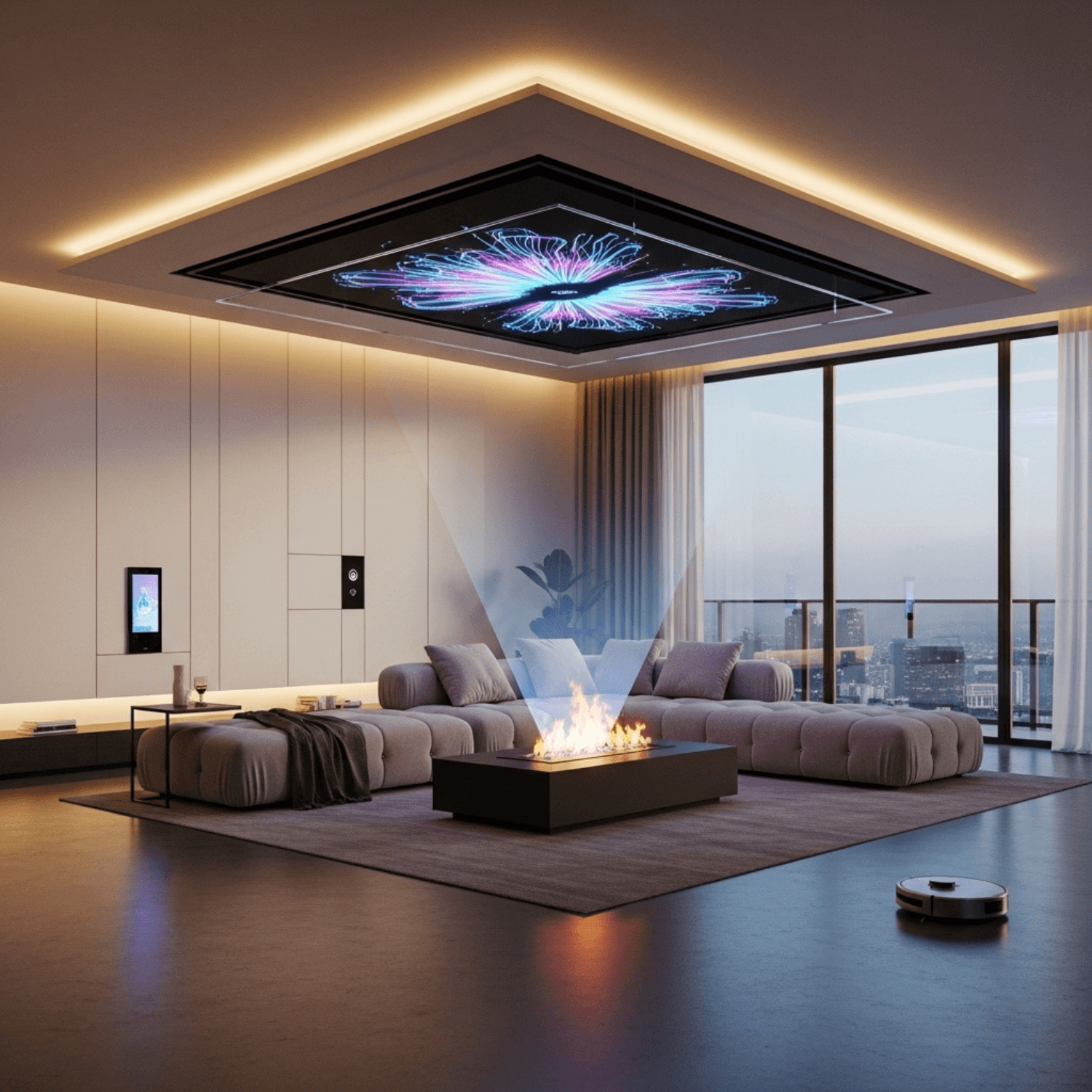
AI interior design for smart homes focuses on blending technology into living spaces without disrupting aesthetics. Smart homes often suffer from visible devices and cluttered controls, but AI tools solve this by planning layouts that conceal technology. Lighting systems, climate controls, and smart devices are integrated subtly into walls, ceilings, and furniture.
AI interior design for smart homes ensures that convenience feels natural rather than intrusive. Lighting scenes are designed to match daily routines, while furniture placement supports effortless interaction with smart features. Color palettes and materials are chosen to soften the presence of technology, creating warm and inviting interiors. The result is a home that feels modern, intelligent, and visually calm. AI proves that smart living does not have to look technical—it can be elegant and comfortable.
13. AI Interior Design Tools for Homeowners Planning Their Own Spaces
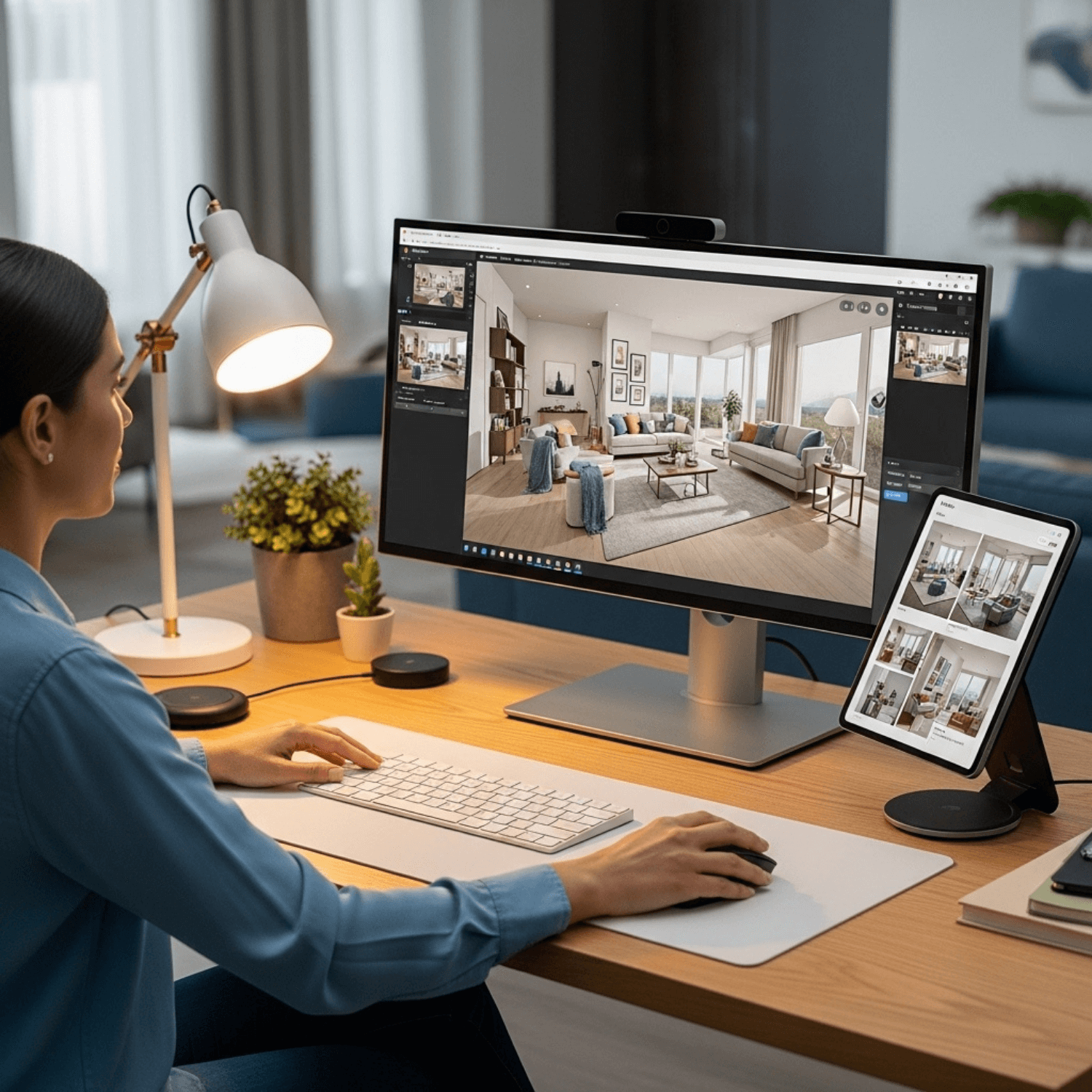
AI interior design tools for homeowners have made professional-level planning accessible to everyone.These tools allow users to visualise layouts, furniture placement, colour schemes, and lighting before making real-world changes. By analysing room dimensions and preferences, AI generates realistic design previews that help homeowners make confident decisions.
AI interior design tools for homeowners reduce costly mistakes by allowing experimentation without commitment. Users can compare styles, adjust layouts, and explore alternatives instantly.This empowers homeowners to take control of their design process while maintaining practical outcomes. Instead of relying solely on intuition, AI offers data-driven suggestions that enhance both aesthetics and functionality. These tools are transforming how people approach home design, making the process more informed and enjoyable.
14. AI Interior Design Trends 2026 Shaping the Future of Homes
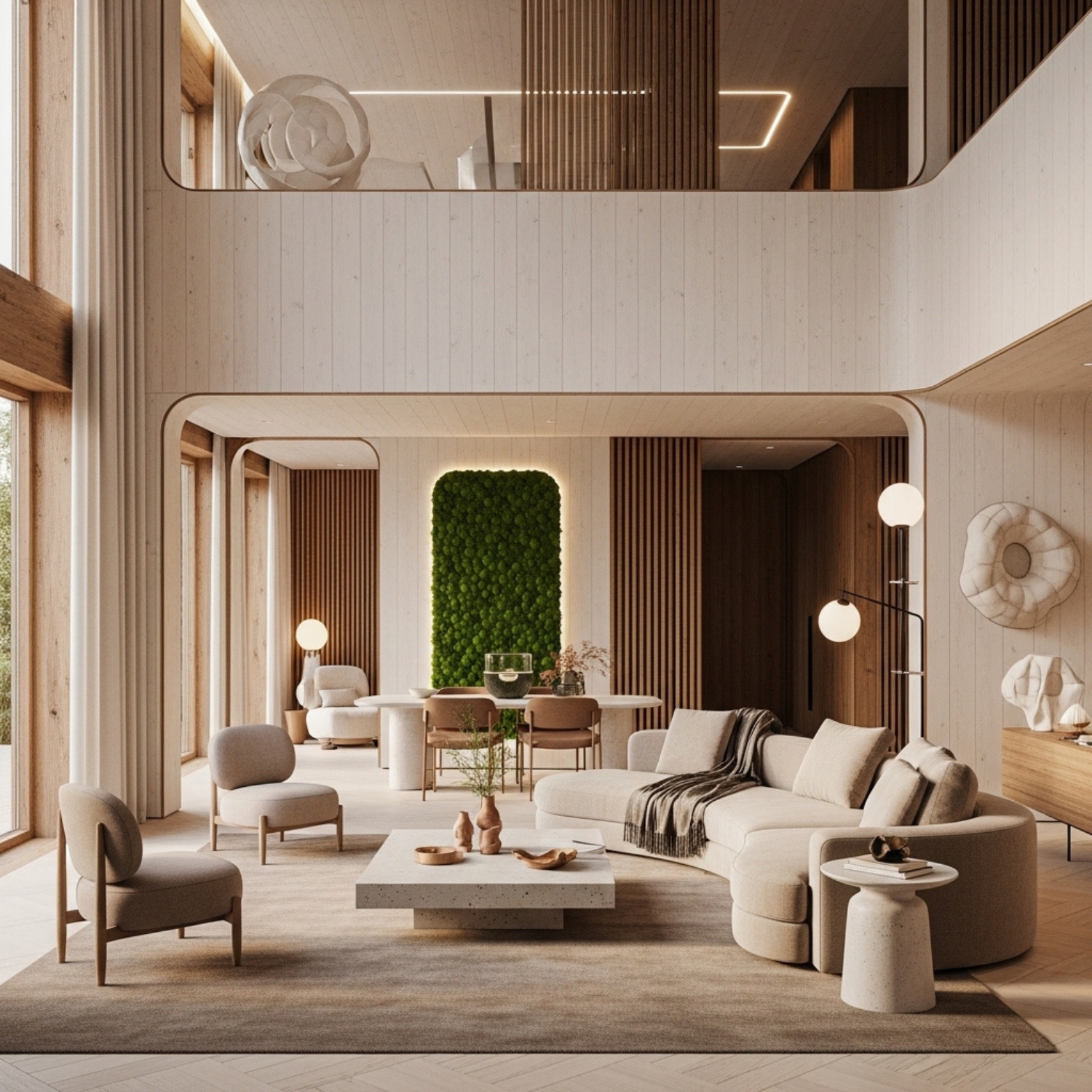
AI interior design trends 2026 reflect a shift toward personalised, sustainable, and flexible living spaces. Future homes will be less about rigid styles and more about adaptability. AI tools analyse lifestyle needs to create interiors that evolve with changing routines. Natural materials, calming colour palettes, and modular furniture will dominate future interiors.
AI interior design trends 2026 also emphasise efficiency and well-being. Smart layouts, energy-conscious materials, and clutter-free spaces will become standard. AI will guide homeowners toward long-term design decisions rather than short-lived trends. The future of interiors lies in thoughtful planning supported by technology, resulting in homes that feel intentional, comfortable, and timeless.
15. AI Interior Design Ideas for Kitchens With Better Workflow
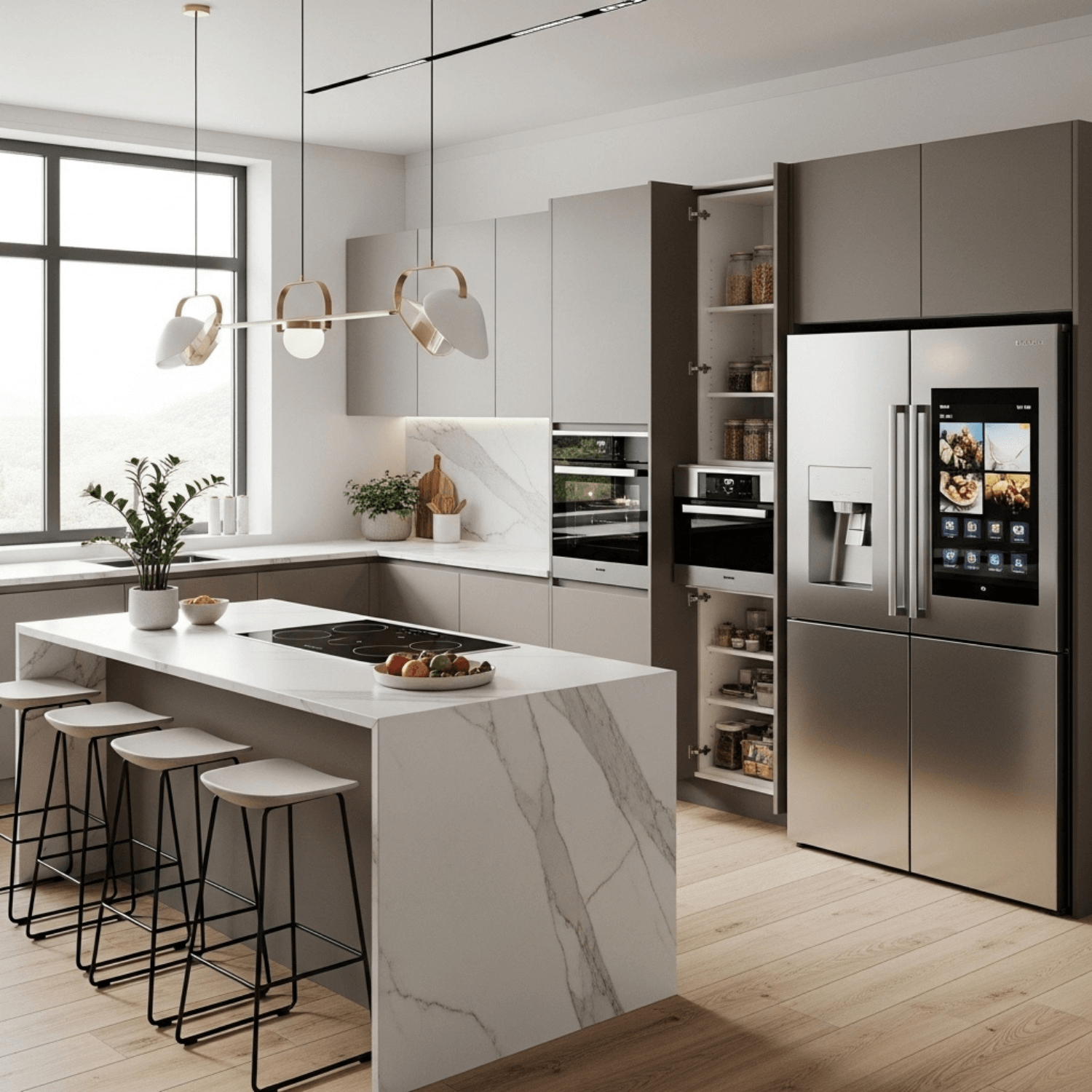
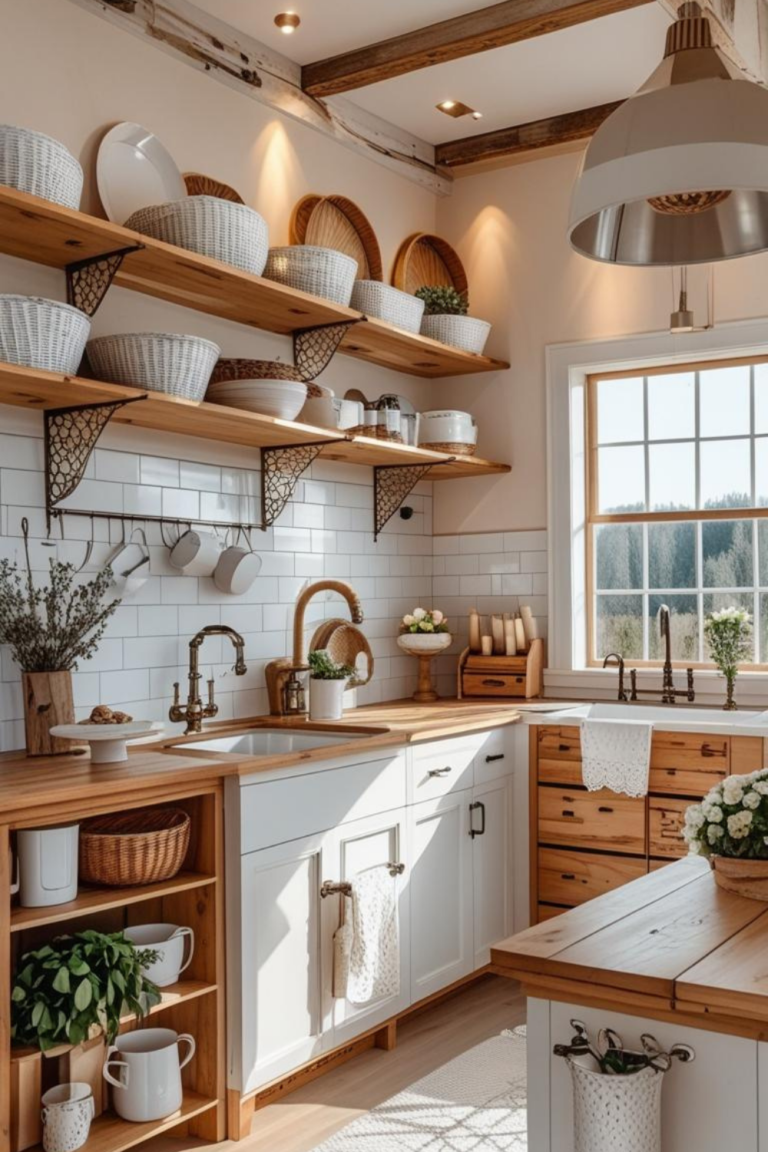
AI kitchen interior design ideas focus on efficiency, cleanliness, and visual harmony. Kitchens require careful planning to support daily movement, and AI tools analyse workflow patterns to optimise layouts. Storage placement, counter spacing, and appliance positioning are designed to reduce unnecessary steps.
AI kitchen interior design ideas also improve aesthetics through balanced colour schemes and lighting. Clean lines, smart storage solutions, and durable materials are prioritised. AI ensures kitchens are not only beautiful but also practical for everyday use. The result is a kitchen that feels organised, modern, and easy to maintain, supporting both cooking and social interaction.
16. AI Interior Design for Home Offices That Support Productivity
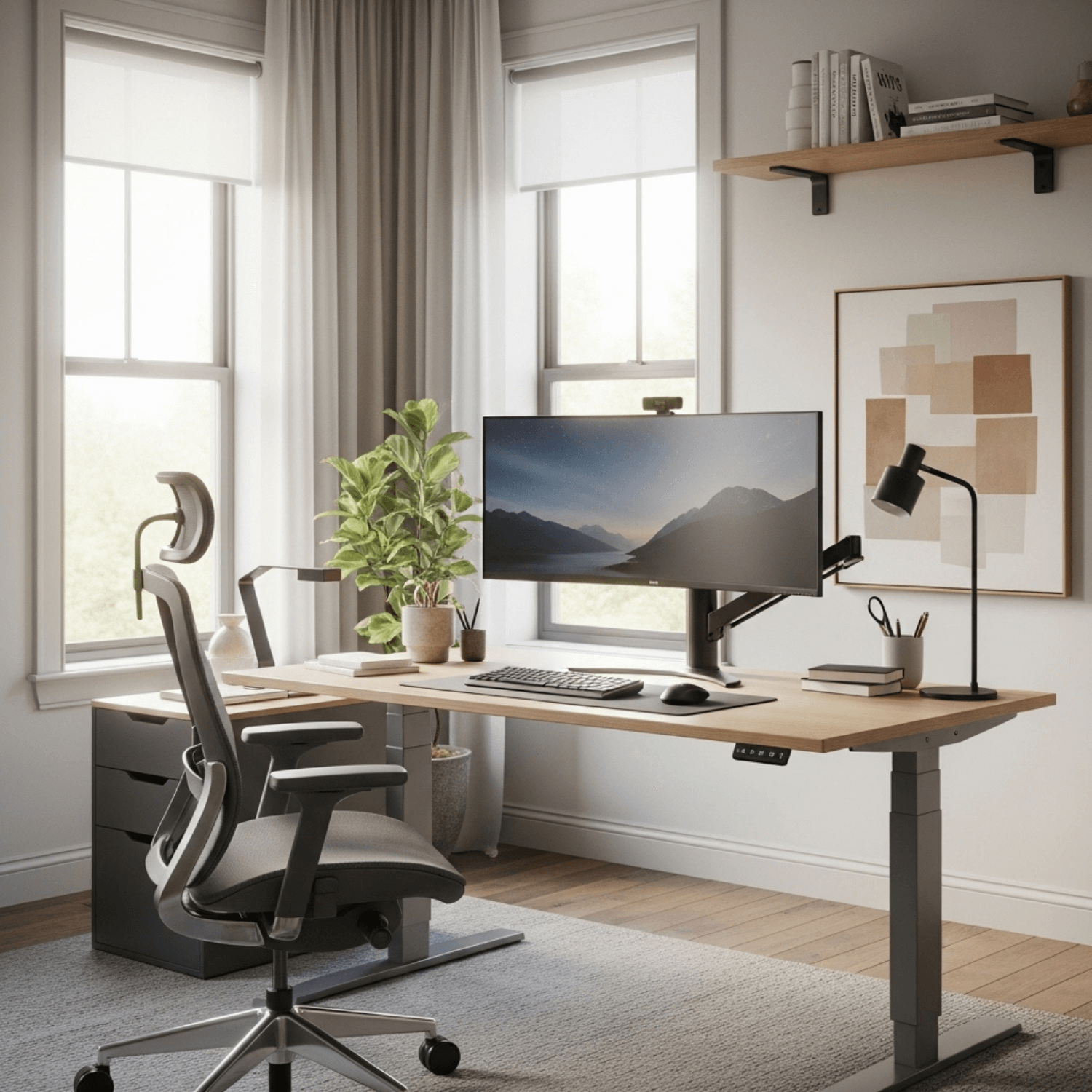
AI home office interior design helps create workspaces that balance productivity and comfort.
By analysing room size, lighting conditions, and individual work habits, AI tools recommend ergonomic layouts that support focus and long-term comfort.Desk placement, storage solutions, and lighting are optimised to reduce distractions and improve focus.
AI home office interior design also considers visual calm. Neutral colors, minimal decor, and natural light are often recommended to support concentration. By visualizing different setups, homeowners can choose designs that suit their workflow. The result is a home office that feels professional, comfortable, and mentally supportive, making remote work more efficient and enjoyable.
17. AI Interior Design for Sustainable Homes With Eco-Friendly Choices
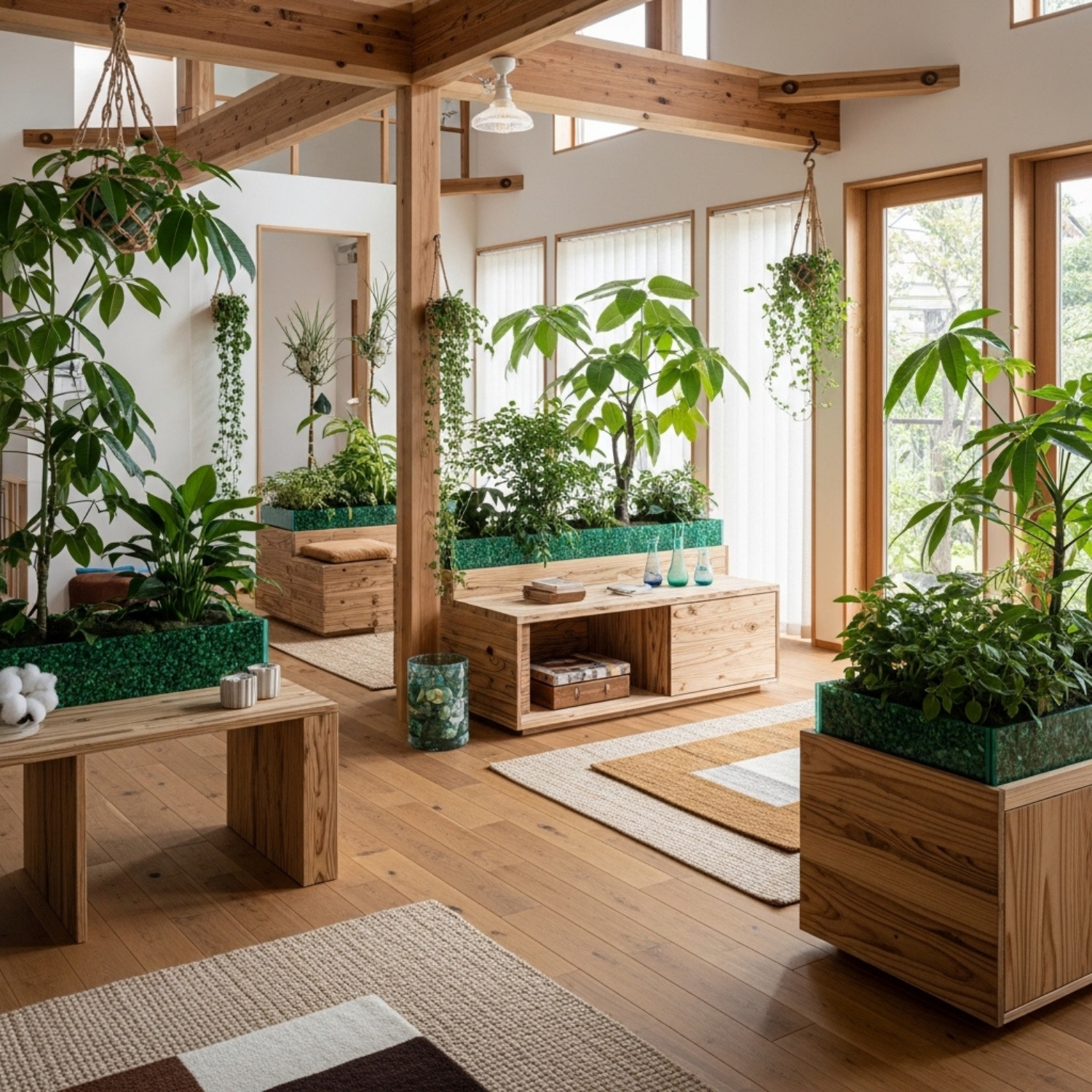
AI eco friendly interior design supports sustainable living without compromising style.
Through data-driven recommendations, AI tools suggest natural materials, low-impact finishes, and energy-efficient layouts that balance aesthetics with responsibility. These choices help reduce environmental impact while maintaining comfort and aesthetics.
AI eco friendly interior design also focuses on durability and long-term value. Instead of disposable trends, AI encourages timeless materials and layouts that age well. Natural light is maximised, and ventilation is improved through thoughtful planning. The result is a sustainable home that feels warm, healthy, and visually balanced, proving that eco-conscious living can also be beautifully designed.
18. AI Interior Design for Studio Apartments With Smart Layouts
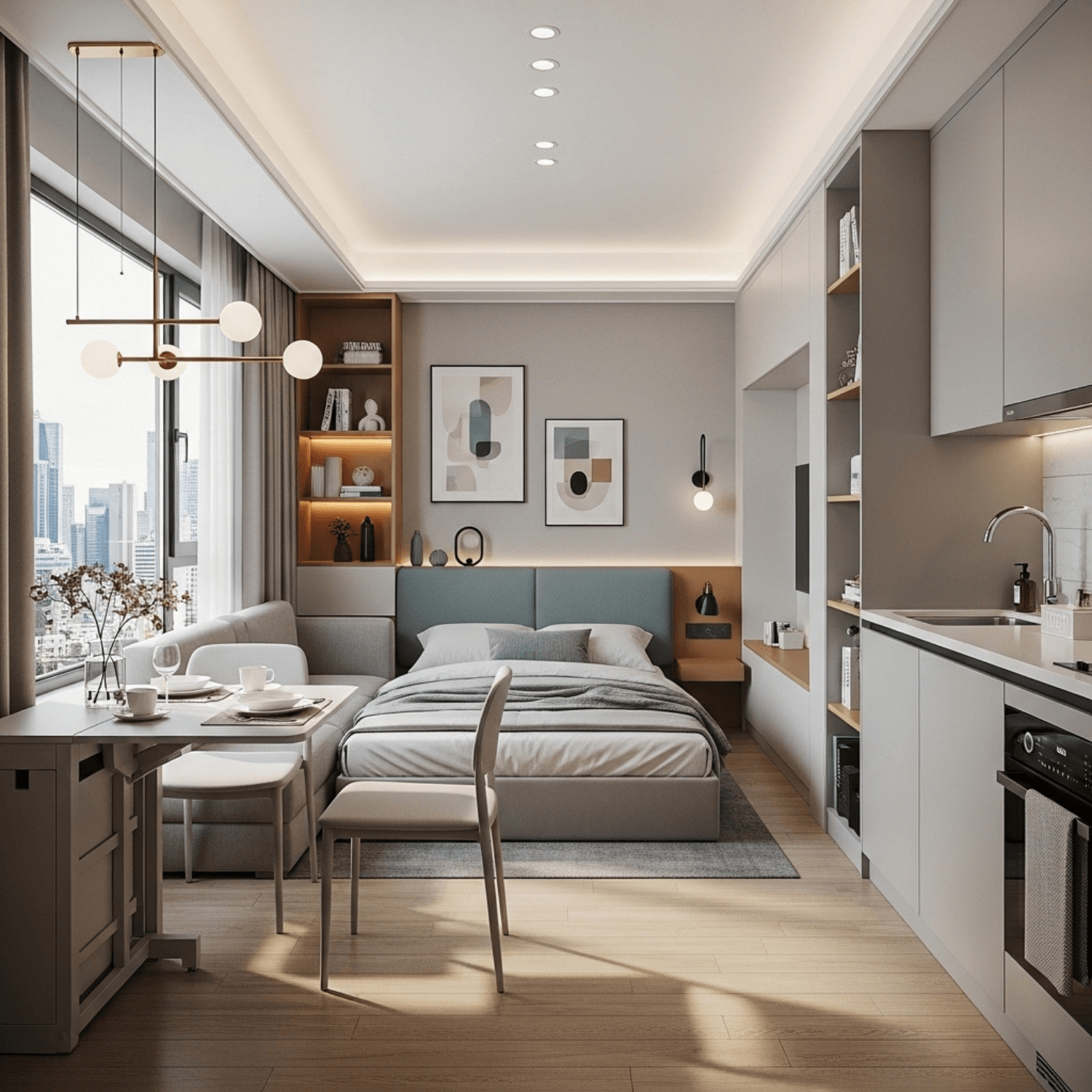
AI studio apartment interior design addresses the challenge of combining multiple functions in one space.
To achieve this, AI tools create visual separation between sleeping, living, and dining zones without the need for physical walls.Furniture placement and lighting variations help define areas while maintaining openness.
AI studio apartment interior design also maximises storage through vertical solutions and multi-functional furniture. Colour palettes are kept light to enhance spaciousness. The result is a studio that feels organised, comfortable, and visually larger than its actual size. AI ensures studio apartments remain practical while still feeling stylish and modern.
19. AI Interior Design Mistakes to Avoid for Better Results
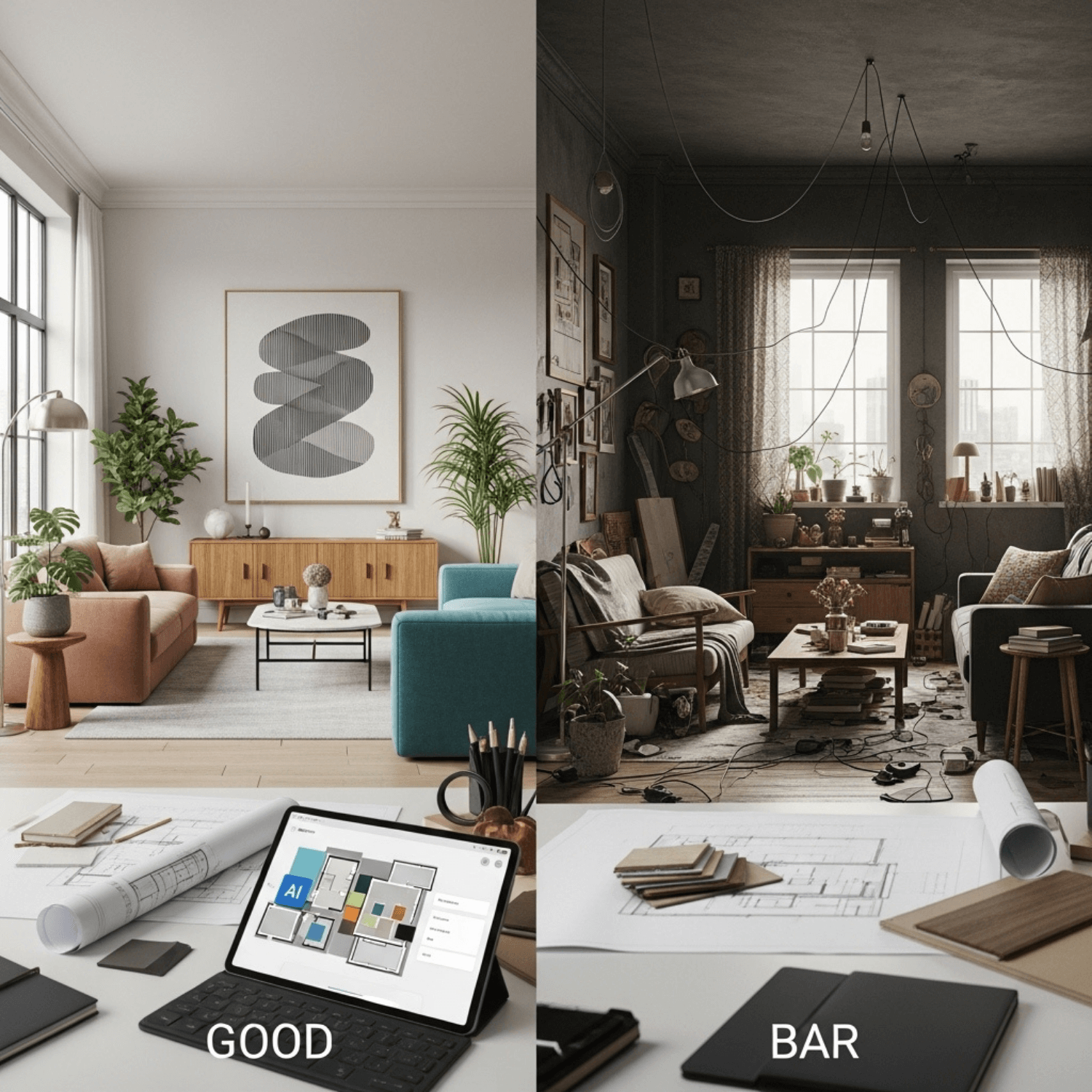
Many AI interior design mistakes arise when design decisions rely solely on technology without thoughtful human judgment. Overusing trends, ignoring lifestyle needs, or overcrowding a space can reduce functionality. AI tools provide guidance, but refinement is essential.
Understanding ai interior design mistakes helps homeowners balance suggestions with practicality. Reviewing layouts, adjusting scale, and considering daily habits ensures better outcomes. AI works best as a collaborative tool rather than a final authority. Avoiding these mistakes leads to interiors that feel comfortable, functional, and personalised.
20. How AI Is Changing Interior Design for Modern Living
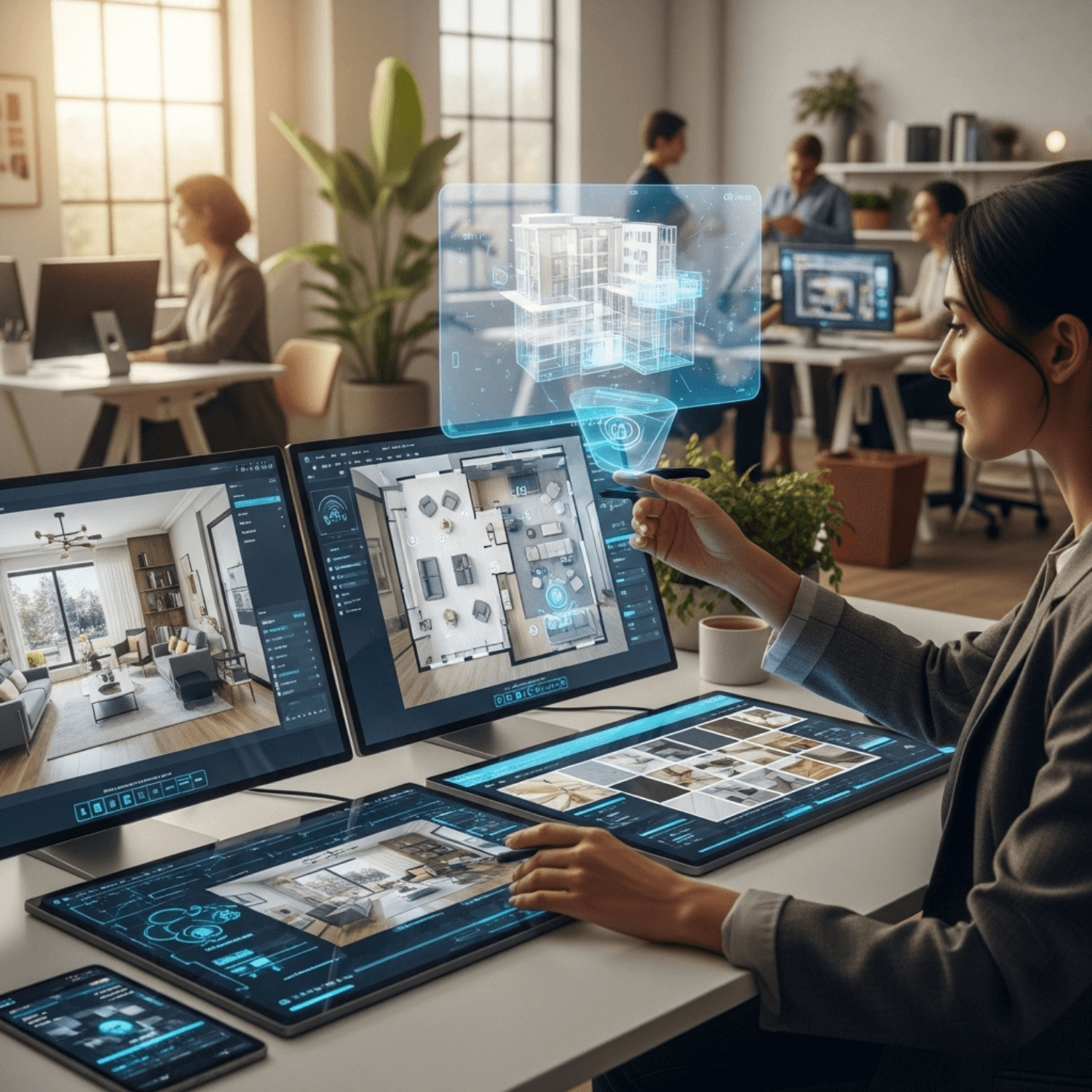
How AI is changing interior design is most evident in the way it improves accessibility, efficiency, and precision. AI tools allow faster visualization and better planning, reducing costly errors. Designers and homeowners alike benefit from data-driven insights.
How AI is changing interior design also highlights collaboration rather than replacement. AI enhances creativity by providing structure and clarity. The future of interiors lies in combining human taste with AI precision, resulting in homes that are functional, stylish, and deeply personal.